


We just lost a six-figure recurring customer.
Our annual growth goal? Shattered.
What’s the first question that comes to mind?
Why did they leave?
Or, if you’ve read one of my prior articles, we might ask:
What contributed to their leaving?
And, inevitably, we ask:
Who was responsible for this “tragedy”?
All questions looking for a reason. With the last looking for a scapegoat.
And before we start to point fingers at other departments — Customer Success, Product, Sales, the executive team…
Where is the very first place we should look?
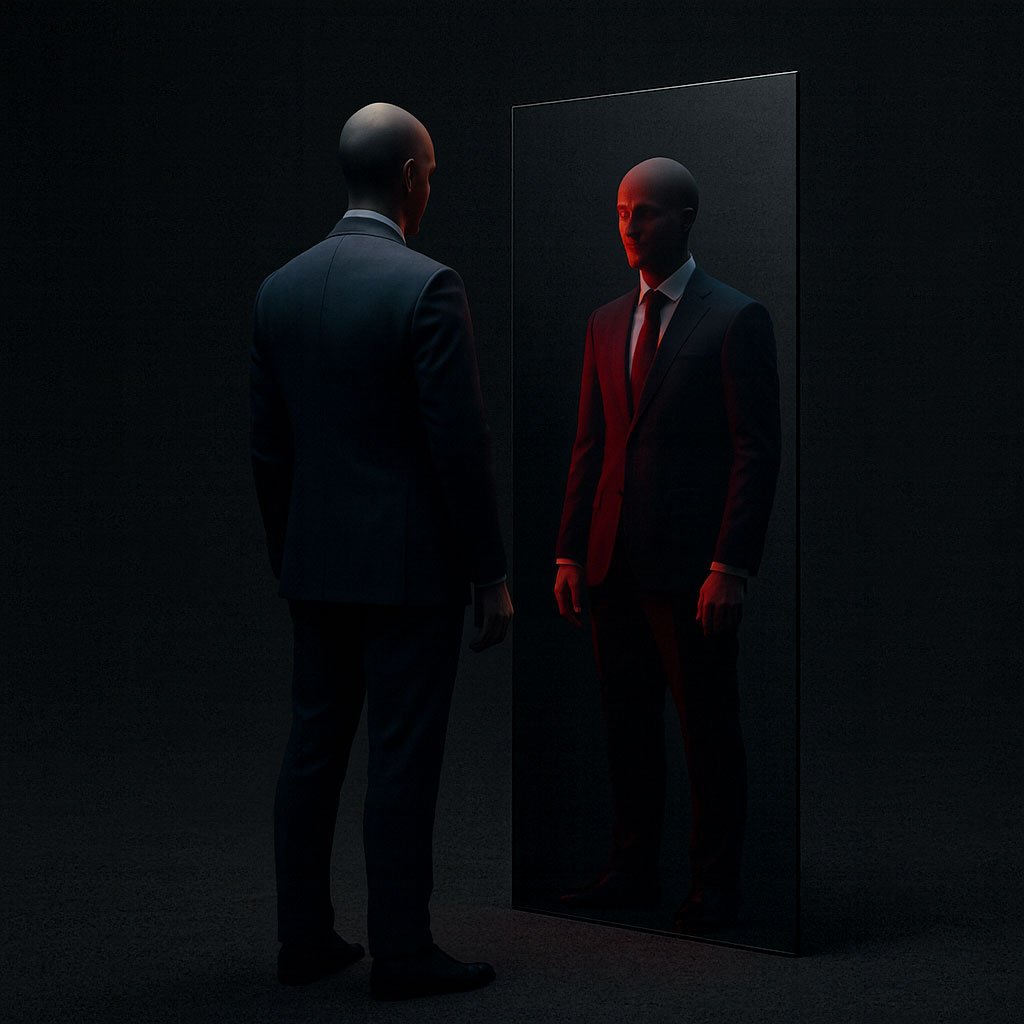
The mirror.
Wait a second!
Who am I talking about?
The CEO? Other executives? Other people with authority?
Be honest — you’re probably thinking:
He’s clearly not talking about me.
And, yet I am.
I’m talking about you. About me. About all of us.
Because if we accept that responsibility starts with us,
- We become more confident.
- We become happier.
- We build better teams.
And we finally become ready to embrace real freedom.
Allow me to explain and offer one simple, powerful question to guide us.
Responsibility as a State of Mind
This is the fourth installment in a series about empowerment using a principle known as Let People Run. It’s built on the F.A.R. framework: Freedom, Alignment, and Responsibility.
Today, I want to focus on the last of this list: Responsibility.
And specifically, I want to focus on self-responsibility — the kind that doesn’t wait for permission or direction, but starts internally, with us.
It’s a word we hear all the time, and we often assume we know what it represents. But I am going to challenge that assumption.
As kids, we were taught societal basics such as be honest, be polite, say sorry when we mess up. These are good lessons.
Yet, they were often presented as responsibility — and they are not.
Think about it:
- We may have lied about doing our homework because we didn’t want to get in trouble.
- We said sorry when prompted – but perhaps without meaning.
- We acted polite when someone was watching.
Yet, these weren’t acts of responsibility.
They were acts of compliance.
And, over time, we came to associate being responsible with looking good, following rules, or dodging blame.
In essence, these taught us to look to others to determine whether we were responsible.
They taught us to outsource responsibility.
Fast forward to our adult lives and the pattern persists.
We look externally with questions like “Who’s responsible?” and “Whose fault is this?”
We even reward rule followers who simply do as they’re told — even if that’s not what really needs to be done.
I argue here that if we’ve been granted freedom, we can only succeed by taking responsibility.
And I’m not talking about seizing control or pushing others aside.
Nor am I talking about “going solo”.
We still need to trust and rely upon each other.
I’m talking about how we approach the situation — by starting from within.
I’m talking about feeling self-responsibility and welcoming what it can do for us.
To do this, we will need to break free from the childhood meaning of responsibility.
And it starts with a simple question.
Who am I that…
To borrow from Buddha:
“Do not give attention to what others do or fail to do; give it to what you do or fail to do.“
The lesson is simple, but not easy:
Responsibility begins within.
This is self-responsibility.
And if we’re honest with ourselves, it’s hard. BUT, it’s worth it.
In any situation – personal or professional – we can start shifting our mindset with this one question:
Who am I that…?
Let me be clear. This question is not about fault.
Fault implies blame. It’s tied to guilt, judgment and defense.
Self-responsibility is different.
It’s not about who caused the problem.
It’s about who’s willing to own their role – past, present and future.
To say, “I’m part of this,” even if I didn’t start it.
To ask, “What can I contribute?” even if I can’t fix it alone.
Responsibility isn’t reactive.
It’s a mindset.
It’s the decision to stop outsourcing your impact.
At first…
“Who am I that…” may sound strange. I struggled with it at first. And, I can’t say that I liked it. It felt vulnerable.
But once I realized what it really meant — and could do for me — I was able to recognize it for the gold that it is.
Allow me to explain.
What this question is really getting at is how my involvement – or lack of involvement – contributed to the situation.
- What did I do, or not do?
- What could or should I have done?
- How else could I have contributed positively to the outcome?
To better frame this concept, let’s consider how this question could be utilized in some basic situations, such as:
- The project is behind schedule.
- Who am I that I’m on a team missing its commitments?
- Translation: What am I doing to get us back on track – even, or especially, if my “part” is done.
- Who am I that I’m on a team missing its commitments?
- I’m still waiting for someone to respond to my request.
- Who am I that I am passively waiting?
- Translation: What am I doing to help them prioritize responding?
- Who am I that I am passively waiting?
- No one listens to me or takes me seriously.
- Who am I that I’ve allowed myself to become ignored?
- Translation: What am I doing to earn more credibility?
- Who am I that I’ve allowed myself to become ignored?
Note that all the questions are internally facing – and while we certainly will need others, we look to ourselves first.
By asking this simple question:
- We move from passenger to driver;
- We shift from “this is happening to me” to “I will shape what comes next;”
- We move from victim to owner; and
- We stop outsourcing our impact.
To reiterate my point from above, this question isn’t about self-blame or self-deprecation.
It’s about taking ownership.
Easy for you to say…
I know what some of you may be thinking:
“That’s easy for you to say — you’re the CEO.”
Or, you may say:
“I don’t have the authority.”
“I’m just a cog in the machine.”
And I get it. Those feelings are real.
And if we think CEOs (VPs, Directors, etc.) are immune from these feelings, we would be mistaken.
That’s exactly why this mindset matters.
“Who am I that” isn’t about authority. It’s about reclaiming our agency — driving our own contributions to influence the outcomes.
It’s about ownership — the willingness to accept responsibility for outcomes, regardless of direct control.
With the right mindset, both are always available.
We each see situations from unique angles and bring different experiences to the table. We are each unique and responsibility requires us to make our impact, even or especially if it’s scary.
Personal Reflection
As I mentioned earlier, I struggled with this simple question at first. I’ll admit — it felt like self-blame. But it’s not.
Think back to the lost customer I mentioned at the beginning. My first instinct was to find out what someone else did wrong. I knew enough to say “we” when talking about it — but in truth, I was pointing the finger.
But when I asked myself, “Who am I that…”, I uncovered blind spots I’d missed. I shifted focus from judging what others were doing (or not doing) to asking what I could do differently.
I moved from bystander — or judge — to participant.
And I’m an infinitely happier, more effective person because of it.
Key Takeaway
We often think responsibility is about authority, accountability, or doing our part.
But self-responsibility is internal.
It’s the willingness to look in the mirror—especially when things go wrong—and ask:
Who am I that this is happening?
When we stop outsourcing our impact, we reclaim our agency. We shape outcomes, rather than waiting to be rescued. And that’s what makes freedom work.
Freedom without self-responsibility isn’t empowerment—it’s chaos.
But with self-responsibility? It’s culture shifting. It’s energizing. It’s how we grow.
Try This:
Next week, pick one project or situation (personal or professional) and ask yourself “Who am I that ______ is happening?” Think about what you can do to change it. Share your experience in the comments or with a colleague.
Ask yourself if you feel more in control and happier. I did.
