


Q: When did “efficiency gains” last seal a deal?
A: Just last week a customer espoused how happy they were with our product that saved them tons of time!
Q: Do you know what they did with that time?
A: Uh…
Q: Do you know how the time saved impacted their business?
Spoiler Alert: If efficiency is your unique value proposition, you’re not unique.
Yet software as a service (“SaaS”) homepages keep shouting about it: “Save time.” “Automate busywork.” “Work smarter, not harder.” Scroll a handful of websites and you’ll see the same wallpaper.
Of course, efficiency matters. But no one is buying software because it’s efficient.
They’re buying what efficiency gives them.
The Allure of Efficiency
Let’s define it: Efficiency is achieving maximum productivity with minimum wasted effort.
If we believed we were inefficient, we’d search for “how do I improve efficiency?” and watch the internet melt under the flood of answers.
Nearly every SaaS company claims to solve it.
And that makes sense. Isn’t that why we invented computers in the first place? To calculate faster, process more, reduce manual work?
But here’s the catch: efficiency is no longer a differentiator. It’s assumed.
It would be like car companies advertising how their vehicles get you from point A to point B faster than walking.
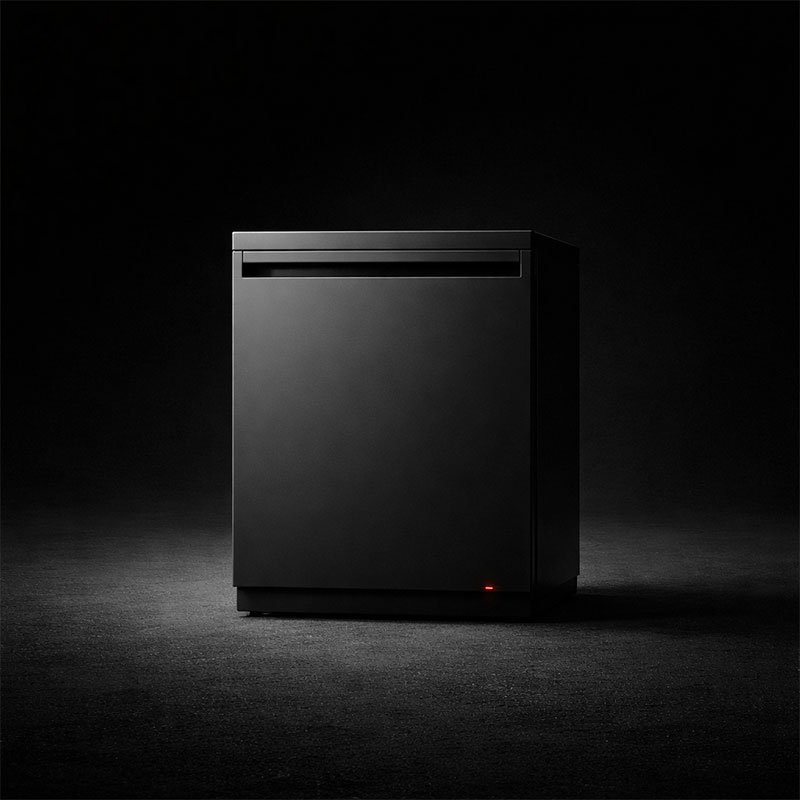
A Dishwasher Story
When dishwashers first hit the market, efficiency was the headline.
Ads promised freedom from “the most monotonous, hand-scalding job in the world.”
Housewives were shown smiling while the machine handled the mess. The pitch was clear: you’ll save time, and you’ll save your hands. An escape from the drudgery.
And it worked. Back then, efficiency was novel.
Handwashing was the pain. There was indeed a better way.
The machine was the solution.
But fast-forward a few decades. Do we buy a dishwasher today because it’s more efficient than handwashing? Of course not. We assume that.
Modern dishwashers are sold on silence: “So quiet you can run it at night.” On sanitation: “Kills 99.9% of bacteria.” On lifestyle: “Third rack for tall glasses.”
Efficiency is there, assumed.
But it’s not the selling point. It’s table stakes.
The real marketing is about what the efficiency enables: peace of mind, cleaner dishes, a quieter home, even a sleeker kitchen.
SaaS Is in the Same Place
In the early days of “software as a service” (“SaaS”), efficiency was the story. Automating payroll, email marketing, or lead tracking was a breakthrough.
Today? Every competitor promises to “save time” and “eliminate busywork.” It’s the SaaS equivalent of promising your dishwasher cleans dishes.
- “The easiest way to automate your work.”
- “The fastest way to __________.”
These aren’t bad messages, per se.
They’re just interchangeable. Swap them between companies and you’d barely notice.
The most basic litmus test is this: If our homepage headline could sit on a competitor’s site and still make sense, we’re not selling.
We are simply running with the crowd (and it’s crowded).
What Buyers Really Buy
Here’s the truth: no one buys efficiency.
Businesses buy for one of three reasons:
- Increase revenue.
- Decrease costs.
- Decrease risks.
Period. That’s the decision tree.
If there isn’t a clear line to one of these reasons, buyers won’t be lining up.
Efficiency may hint at them, but it doesn’t speak to them.
And before anyone says their solution solves all three, please don’t. I’ve tried it. It’s not compelling.
Our job is to identify that one factor our solution solves and be unapologetic about it.
For example, assume we have an accounting solution that we claim saves 10 hours per week. As a prospect, do I care enough to prioritize this issue? Is it an urgent concern?
Let’s find out by tying it back to the decision tree:
Does it increase revenue? Doubt it.
Does it decrease costs? Unclear, unless I can reduce headcount or third-party costs?
Does it decrease risks? Perhaps.
My point is that “saving time” doesn’t speak to a clear pain or opportunity.
The efficiency message leaves the prospect to make the connection.
Rather, assume my accounting solution saved time with invoicing & collecting for my products.
If I believe I could collect from my customers faster, is that compelling?
Remember, it’s not about the time saved; it’s about what the efficiency produces.
For most businesses, cashflow is always important. It ties directly to revenue.
Instead of time saved, the message could simply be: improve your cashflow.
If I was a company with cashflow concerns, they’d have my attention.
The Leadership Challenge
As leaders, we need to ask harder questions about our value.
Not: “How does our product help with efficiency?”
But: “What pain are we removing? What opportunity am I creating?”
This isn’t just about marketing. It applies inside our teams too.
Asking for an efficient onboarding process is hollow without purpose.
Asking to increase customer satisfaction by removing waste in our onboarding process has meaning.
Efficiency is the dishwasher.
The real story is the quiet kitchen, the sanitized glass, the time with family.
Takeaway
Efficiency isn’t the end game. It’s the expectation.
The real win is naming the pain you remove or the opportunity you create.
Sell that.
