


“We went in a different direction.”
Those dreaded words that signal a lost sale.
I had just spent five months guiding the prospect through our sales process.
I was responsive, professional, and asked all the right “what” questions:
- What’s the problem that needs solving?
- What’s the timeline?
- What’s the budget?
- What do we need to close this deal?
They said all the right things.
I was confident and had “committed” the deal to forecast.
I could taste it — this was going to be a great customer!
And then… silence.
No returned emails.
No returned calls.
Eventually, we got the rejection.
And even though I knew it was coming, I was gutted.
Yes, I know the saying: “we can’t win them all.” But that did little to ease the sting.
I felt like I had done everything right.
So, what happened?
More to the point: why didn’t they choose us?
When “Why” Shines
In my last post, I posited that “why” can often stand in the way of honest discovery.
I noted that “why” can trigger an emotional response, triggering defensiveness, sparking blame and even shutting down conversations before discovery happens.
I suggested that starting with “what” can lower emotional temperatures and open the door to clarity.
But let’s be clear, I’m not here to cancel “why”.
“Why” is a very powerful tool — too powerful to be used casually, but too important to be left behind.
Its power is in generating an emotional response.
And sometimes, that’s exactly what we need — not to provoke or intimidate, but to reveal something deeper: conviction.
When we want to truly gauge someone’s belief, intent or resolve, “why” cuts through the fog and gives us clarity.
Let me show you what I mean.
A Midsummer’s Night Stroll
Years ago, I had the chance to walk along the River Cam in Cambridge, England.
I’d just finished dinner with a partner at one of the top accounting firms—someone I worked with at my current company. I told him I’d soon be changing jobs, and that I planned to bring his firm with me to the new company.
We had a strong working relationship and therefore, I expected him to be excited.
He wasn’t.
He didn’t ask how I’d make it happen.
He didn’t ask who he needed to meet.
He didn’t ask what the process would be.
Instead, he stopped our walk, lightly grabbing my arm and looked me straight in the eye and asked:
“Why would you change providers?”
The way he emphasized “would” caught me off guard.
It wasn’t just a request for information — it was a challenge.
He was asking me to defend a decision I thought I had already made.
I was stunned.
It felt like a punch in the stomach.
I wasn’t angry, but I oddly felt nervous.
I had already said I wanted to make the change—now he was asking me to defend that decision.
In that moment, the spotlight was on me.
And I had to perform.
I needed to justify my viewpoint.
As I scrambled to articulate my reasons, something unexpected happened: I became more committed.
I wasn’t just floating an idea anymore.
I was owning it. Fighting for it. Determined to make it happen.
Only later did I recognize the brilliance in his question.
Whether he meant to or not, he shifted my mindset from interest to conviction.
He didn’t need to sell me—I sold myself.
When “Why” Really Matters
Sometimes we need more than just information.
We need to know how deeply someone believes in their answer.
We need to trigger an emotional response to uncover their conviction.
And there is no better question word than “why” to do it.
Sure, we can (and should) start with the “what” questions.
They work beautifully for discovery — whether we are troubleshooting a website outage or mapping out a project timeline.
But when it comes to testing passion, “what” falls short.
And “what” fails for the exact reason it succeeded: a lack of emotion.
Consider interviewing someone for a role.
We ask:
- What’s your background?
- What are your qualifications?
- What strengths would you bring to this role?
These are good questions. They surface skills, experience and even a personal story. But these questions are devoid of emotion and don’t surface belief.
If we really want to know if someone is ready to step into the opportunity, we need to ask the question often left unasked:
- Why should I hire you?
It’s direct.
It’s raw.
And yes, it’s a little uncomfortable.
And that’s the point.
When we ask “why should I hire you,” we are not looking for a polished sales pitch. We’re assessing:
- How well they understand the role;
- How well they believe their strengths truly align with the opportunity; and
- How much passion they feel about the chance to make an impact.
It is not about intimidation. It’s about illumination.
By asking “why,” we can find what no resume or reference check can show us: conviction.
Back to the Lost Sale
Not to be forgotten, let’s revisit the earlier question: why didn’t they choose us?
I’ll offer up a theory on how we lost.
We never asked “why”.
We thought we had commitment, but we failed to test it.
I’m not saying that asking “why” would have guaranteed a win.
But if we’d asked: “Why would you choose us?” we might have learned something critical that we could have addressed.
- Maybe they couldn’t clearly articulate the value.
- Maybe their conviction was weak.
- Maybe they weren’t ready to defend the decision to their team.
Or maybe — just maybe — asking why would have helped them cross the line and truly commit.
Asking “why” doesn’t just test knowledge—it tests belief. It invites someone to step forward and claim their decision.
And whether you’re hiring, selling, or leading, that clarity matters. Because when people own their choices, they commit to making them real.
That’s the real power of knowing when—and how—to ask “why.”
Takeaway: Knowing When to Use “What” and “Why”
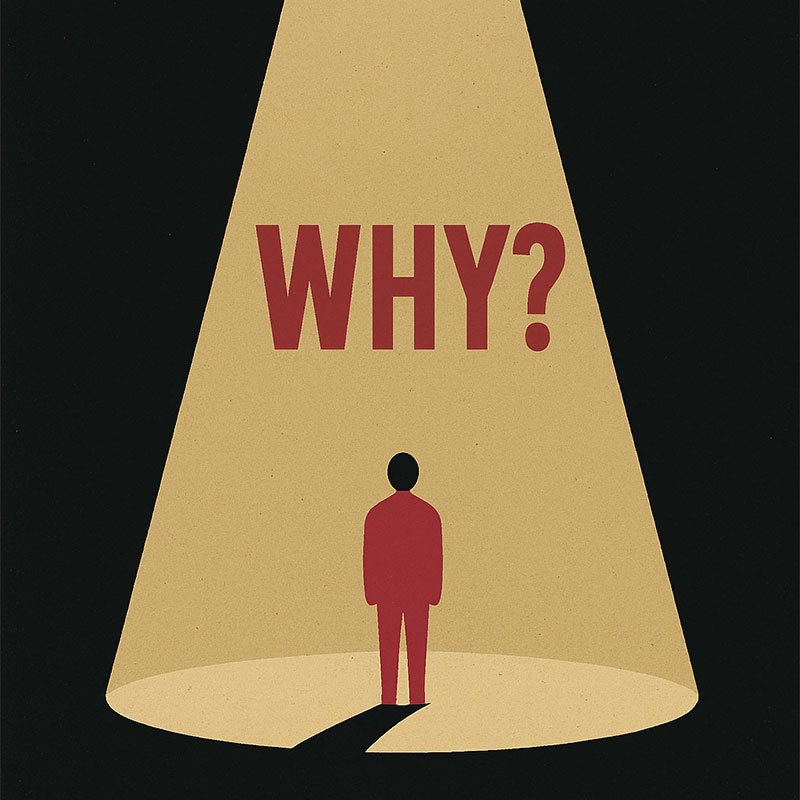
“Why” is like a spotlight. Used carelessly, it can blind. Used wisely, it reveals clarity.
“What” is like a magnifying glass. It helps us look deeper, uncover details, and understand the facts. But it cannot measure emotion—or conviction.
Each tool has its place. The key is knowing what you’re trying to see.
A simple guide to remember:
- Use “what” when you need an unemotional discovery of details, data, and story.
- Use “why” when you’re testing resolve, passion, and conviction.
Get it right—and you won’t just get better answers.
You’ll uncover conviction.
And conviction changes everything.
“Like” this piece if it got you thinking. Or better yet, tell me why.
If you like this you might enjoy To Find the Truth, Stop Asking Why.
