



There’s a question that comes up in almost every conversation before we start a growth diagnostic or strategy engagement at Forge & Fathom.
Sometimes it’s from the CEO. Sometimes it’s whoever’s coordinating the kickoff. But it comes up, and it almost always sounds the same:
“Who should we invite to these conversations?”
It’s a practical question. Logistics, mostly. People want to know who needs to block time on their calendar.
But I’ve started paying close attention to the list that follows, because the list is never random. It reflects something.
The people who get named first are the people leadership thinks of as growth drivers. Everyone else is support.
And the list is almost always the same.
Marketing. Sales. Maybe finance or “our web guy”. Sometimes a department head if there’s a specific issue on the table.
The people who run your customer experience (CX) function (customer success, support, onboarding, renewal, implementation, the entire post-sale layer of the organization) rarely make the first cut.
Which is interesting. Because those are exactly the people sitting on the evidence your growth strategy needs most.
The Evidence Stream Nobody’s Plugging In
Every time a customer calls in frustrated, that’s a data point. Every renewal conversation where the rep has to fight harder than expected, that’s a data point. Every onboarding call where the customer seems surprised by something they thought they were buying…data point. Every churn moment where someone says “we just didn’t get the value we expected”…data point too.
None of those signals live in your marketing dashboard. They don’t show up in the pipeline report. They exist almost entirely in the heads and notes of the people running post-sale operations.
When those functions are excluded from growth strategy conversations, that entire evidence stream gets cut off.
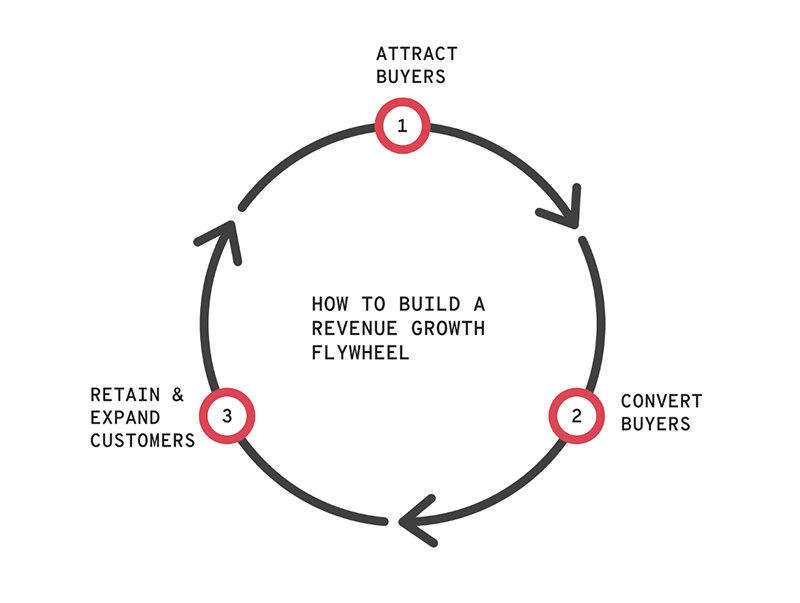
Leadership ends up making forward bets on new segments, refined messaging, or increased investment in [insert tactic here] without access to the feedback loop that would tell them whether those bets are grounded in reality.
What It Looks Like When This Breaks
The scale of this problem is bigger than it looks from inside any one company. Only 1 in 4 B2B companies is growing above their industry average. And Forrester’s research ties that underperformance consistently back to misalignment between forward-facing commercial functions and the customer experience layer. Most leadership teams are aware something is off. Few have correctly identified where the misalignment lives.
I’ve seen it go wrong in two specific ways, and both are expensive.
The first is when marketing and sales are diagnosing a demand problem. Conversion is down, pipeline is thin, something’s off at the top of the funnel. Leadership doubles down on demand gen. New campaigns, new messaging, maybe a new agency.
Meanwhile, CX has been watching a different problem compound for months: customers churning faster, expansion conversations getting harder, the value story not landing after the sale. Demand isn’t the constraint. Retention and fit are. But that conversation happened in a different room.
This misdiagnosis has a real cost. Acquiring a new B2B customer costs 5–7x more than retaining an existing one. Yet most companies still direct the majority of their growth investment toward acquisition. When leadership misreads a retention problem as a demand problem, they pour expensive acquisition spending into a leaking bucket.
The second is expansion. Leadership commits to a new segment based on market signals — analyst data, competitive intel, a few encouraging deals. CX has six or eight months of data from customers in adjacent segments showing exactly where the product experience and support model start to strain for that buyer type.
None of that makes it into the expansion decision. The initiative launches. Twelve months later, the economics don’t work and nobody can cleanly explain why.
Same root cause both times: the people with the most relevant evidence weren’t in the room when the strategy was set.
Why the Room Stays Small Anyway
I want to name the thing that makes this hard to fix, because it’s not negligence.
Post-sale teams can feel like drag in a strategy conversation. They bring problems, friction, edge cases. They talk about what’s already broken rather than what’s possible.
When you’re trying to build momentum around a forward-looking growth plan, someone who keeps raising post-sale complications can feel like a headwind.
I get why the instinct is to narrow the room.
But that friction is actually the only unfiltered signal you have about whether your strategy is working.
Everyone else in the room — marketing, sales, leadership — has some version of a narrative to protect. The post-sale team is just reporting what they’re seeing.
The Question Worth Asking Before Your Next Planning Session
Who in the room has direct access to what customers do, say, and feel after they buy?
If the answer is nobody, you’re not running a growth strategy conversation. You’re running a forward-facing argument built on incomplete evidence, and making investment decisions accordingly.
The fix isn’t complicated. It’s an invite list problem. But you have to recognize it as one first, and make sure you get all the right people in the room.
There’s one more leader missing.
The evidence CX holds only becomes strategically useful when someone in the room has both the authority and the context to act on it. That’s a different conversation (and a different missing seat.)
We’ll cover that next week.
Common Questions
Why should post-sale teams be included in growth strategy conversations?
Post-sale functions — customer success, support, onboarding, renewal, and implementation — hold a continuous stream of evidence about whether your GTM assumptions are actually true. When they’re excluded from strategy conversations, leadership makes forward bets on new segments and messaging without the feedback loop that would reveal whether those bets are grounded in reality. The people with the most relevant evidence are often the last ones invited to the room where strategy gets set.
What happens when CX isn’t part of B2B growth strategy planning?
Without post-sale input, growth strategy operates on incomplete evidence. Marketing and sales diagnose demand problems while CX is watching retention and fit problems compound — in a different room. The result is investment in the wrong constraint, expansion initiatives that stall for reasons nobody can cleanly explain, and a feedback loop that never closes.
